
Meditation for Pain Relief: Train Your Brain
What if managing pain wasn't just about treating where it hurts?
When you stub your toe, strain your back, or wake up with a stiff neck, it's natural to focus on the part of your body that's uncomfortable.
But here's something fascinating: pain isn't simply produced at the site of an injury. It's an experience created by your brain.
And understanding that connection could change the way you approach pain management.
Your Brain, Your Body + The Pain Connection
Your nervous system is constantly collecting information about what's happening inside and outside your body.
When you injure yourself, specialized nerve endings detect potentially harmful stimuli and send signals through your spinal cord to your brain. Your brain processes that information alongside other factors, including your experiences, emotions, and expectations.
The result? The sensation we recognize as pain.
This is an important protective system. But when pain becomes persistent or chronic, things can get a little more complicated.
Why Does Chronic Pain Stick Around?
Have you ever noticed that pain sometimes lingers long after an injury should have healed?
That's because pain isn't always a direct reflection of tissue damage.
With some chronic pain conditions, the nervous system can become more sensitive to signals it would normally process differently. This is sometimes called central sensitization.
Previous experiences, stress, sleep, emotions, and other factors can also influence how intensely we experience pain.
Think of it like a volume dial.
Your nervous system can sometimes turn up the volume on pain signals, making everyday movements or sensations feel more uncomfortable than they otherwise would.
And while chronic pain is absolutely real, understanding how the brain processes it opens the door to additional ways of managing it.
One of those tools? Meditation.
Can Meditation Help Reduce Chronic Pain?
Meditation isn't just about sitting quietly and clearing your mind.
It's a practice that helps you develop awareness of your thoughts, emotions, breathing, and physical sensations without immediately reacting to them.
Research suggests that mindfulness meditation may help some people manage chronic pain by changing how they relate to painful sensations and reducing pain-related distress.
Meditation can also support stress management, emotional regulation, and overall well-being—all of which can influence the experience of pain.
Does that mean meditation can eliminate chronic pain?
Not necessarily.
But it can be a valuable addition to a broader pain management plan.
The goal isn't to ignore your pain. It's to give your brain and body more tools to respond to it.
How Breathwork Supports Your Nervous System
Your breath and nervous system are closely connected.
When you're stressed, anxious, or uncomfortable, your breathing may become faster and shallower.
Slowing your breathing can help encourage a relaxation response, reducing feelings of stress and helping your body settle.
And because stress can amplify pain for some people, developing simple relaxation strategies may help make discomfort feel more manageable.
The best part?
You don't need fancy equipment, a meditation cushion, or an hour of uninterrupted silence.
Five minutes is a great place to start.
Try This: A Simple 5-Minute Mindful Breathing Exercise
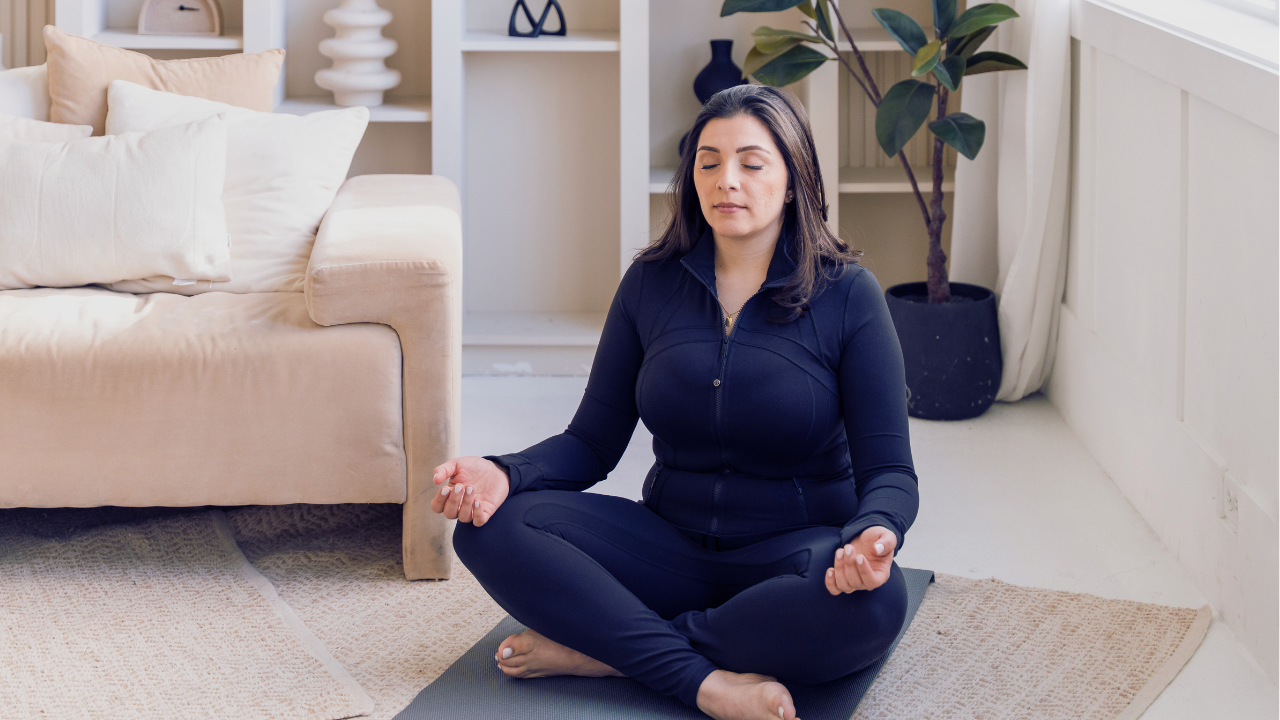
Find a comfortable position. You can sit in a chair, lie on your back, or settle onto the floor—whatever feels most supportive for your body.
Close your eyes if that feels comfortable, relax your shoulders, and begin breathing naturally.
Step 1: Breathe In
Take a slow, gentle breath through your nose. Imagine the breath expanding through your belly, ribs, and chest.
Step 2: Breathe Out
Exhale slowly and comfortably, allowing your shoulders and body to soften.
Step 3: Find Your Rhythm
Continue breathing at a relaxed pace. You can try inhaling for a count of four and exhaling for a count of five, as long as it feels natural.
Step 4: Bring Your Attention Back
Your mind will wander. That's normal.
When it does, gently bring your attention back to your breath without judgment.
Step 5: Repeat
Continue for five minutes, gradually increasing the time as you become more comfortable.
There's no need to force deep breaths or hold your breath. If you feel dizzy or uncomfortable, return to your normal breathing pattern.
Remember, meditation is a practice—not something you need to perfect.
Need a Little Guidance? Try These Meditation Apps
If you're new to meditation, guided sessions can make getting started much easier.
A few popular options include:
-
Headspace: Guided meditations, mindfulness exercises, and sleep support.
-
Calm: Meditation, relaxation exercises, and sleep-focused content.
-
Oak: Simple guided meditations and breathing exercises.
Find something you enjoy and, more importantly, something you can realistically make part of your routine.
A Whole-Body Approach to Pain Management
Pain is complex. Your muscles, joints, nervous system, sleep, stress, and lifestyle can all influence how you feel.
That's why managing persistent discomfort often requires more than one approach.
Mindfulness and breathwork can be useful tools for managing stress and pain-related distress. Movement, rehabilitation, sleep, and appropriate hands-on care may also play important roles depending on your individual needs.
At Body Science, we believe in looking beyond where it hurts to understand the bigger picture.
Because feeling better starts with understanding how your body works—not just where you're feeling pain.
—Dr.Thea
Your health deserves
THE BIGGER PICTURE.
Feeling better starts with understanding your body. Whether you're dealing with discomfort, looking for answers, or simply wanting to feel your best, our team is here to help you take the next step with personalized, integrated care.
Let's get you feeling better.
Better health starts with better information.
Get practical, science-backed insights on movement, recovery, nutrition, prevention, and everyday health delivered straight to your inbox.
No noise. No quick fixes. Just useful information to help you understand your body and take a more active role in your health.
We hate SPAM. We will never sell your information, for any reason.